Beschrijving
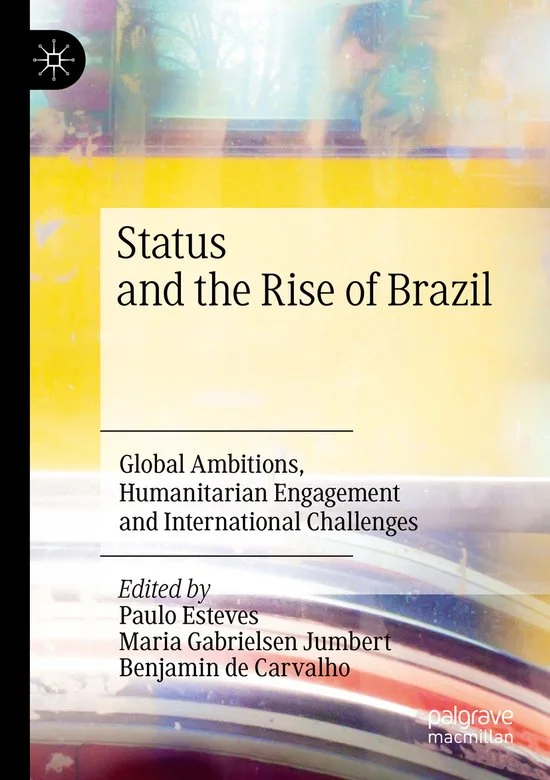
This book explores the evolution of Brazilian foreign relations in the last fifteen years, with a focus on continuities and change. The volume tackles three sets of themes: diplomacy and diplomatic culture, international security and international development cooperation.
This book explores the evolution of Brazilian foreign relations in the last fifteen years, with a focus on continuities and change. The volume tackles three sets of themes: diplomacy and diplomatic culture, international security and international development cooperation. Central to these themes is how they all relate to Brazil’s international status, and its quest for higher standing. The authors draw on a wide variety of methodologies to grapple with the subject matter, from diplomatic history to international sociology and postcolonial studies. The result is a combination of different approaches that seek to account for the foreign relations of Brazil.
Paulo Esteves is Associate Professor in the Institute of International Relations at the Pontifical Catholic University of Rio de Janeiro, Brazil.
Maria Gabrielsen Jumbert is Senior Researcher at the Peace Research Institute Oslo (PRIO), Norway, where she is Research Director of the Dimensions of Security Department.
Benjamin de Carvalho is Senior Research Fellow at the Norwegian Institute of International Affairs (NUPI) in Oslo, Norway.
This book explores the evolution of Brazilian foreign relations in the last fifteen years, with a focus on continuities and change. The volume tackles three sets of themes: diplomacy and diplomatic culture, international security and international development cooperation. Central to these themes is how they all relate to Brazil’s international status, and its quest for higher standing. The authors draw on a wide variety of methodologies to grapple with the subject matter, from diplomatic history to international sociology and postcolonial studies. The result is a combination of different approaches that seek to account for the foreign relations of Brazil.